Showing posts with label traditional arts. Show all posts

Friday, November 16, 2018

2018-2019 Traditional Arts Apprenticeship Grants Announced


The NH State Council on the Arts is thrilled to announce the awarding of Traditional Arts Apprenticeship Grants to 5 Master and Apprentice teams. Apprenticeship grants help communities preserve their cultural heritage through traditional crafts, music, and dance so that future generations can continue to benefit from them. Apprenticeship grants fund a master traditional artist to teach an experienced apprentice in one-to-one sessions over a period of six to ten months. Nearly every state in the US has an apprenticeship program that is supported by the National Endowment for the Arts.


Here are the 2018-2019 Traditional Arts Apprenticeship Teams:

Photo: Sylvia and Anne practicing accordion music at Sylvia's home in Concord.
Photo by Kayla Schweitzer.


Accordion Music of New England and Scotland
Master Artist: Sylvia Miskoe (Concord, NH)
Apprentice: Anne Baier (Bow, NH)


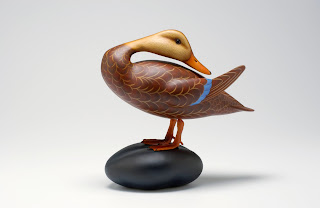
Photo: Cinnamon Teal Decoy by Fred Dolan.
Photo submitted by Fred Dolan.


Decoy Carving & Painting
Master Artist: Fred Dolan (Strafford, NH)
Apprentice: Paul Spencer (Rochester, NH)


Photo: Sarah May and R.P. at press – "Field printing," Hillsboro 2016.
Photo submitted by R.P. Hale. 


Letterpress Printing
Master Artist: R.P. Hale (Concord, NH)
Apprentice: Sarah May Schultz (Epsom, NH)


Photo: St. Nicholas, Miracle Worker Icon by Marina Forbes, 2016.
Photo submitted by Marina Forbes.


Russian Iconography Painting

Master Artist: Marina Forbes (Rochester, NH)
Apprentice: Sister Fran DeMers (Manchester, NH)


Photo: German "Masterpiece" padlock with key
by Kevin Moreau, 2013. Photo submitted by Kevin Moreau.


Blacksmithing (focus on pre-industrial handmade locks)

Master Artist: Kevin Moreau (Brattleboro, VT)
Apprentice: Thomas Boucher (Northwood, NH)


Thursday, September 13, 2018

New Hampshire Folk and Traditional Arts Lesson Plans

Granite State Arts Academy students performing a Traditional Indian Dance during the culmination of an Artist in Residence Program with Master Artist Jasmine Shah.

Deeply rooted within the New Hampshire landscape, traditional arts have been passed on and preserved beginning with our indigenous communities through European settlement to the newly emerging New American and ethnic communities of today. All of us belong to communities or groups that have something in common--a language, a geographic area, an ethnic heritage, a religion, an occupation, or a way of life. Each group, both old and new, express their own traditions, arts, music, crafts, stories, and values that are a vital piece of New Hampshire’s living cultural heritage. Traditional arts connect us to our past, encourage respect and appreciation for diverse cultures and traditions, build strong communities, and cultivate cultural assets. As society and communities continue to evolve, it becomes more and more important to celebrate and learn about our traditions.

Nelson Elementary School Students learning about Albert Quigley and his impact in Nelson by Master Artists Allison and Hunt Smith and Harvey Tolman.

To help our youngest residents learn about a wide range of traditional arts that are practiced in the Granite State, the N.H. State Council on the Arts’ Heritage and Traditional Arts Program developed the Folk and Traditional Arts Lesson Plans to increase the awareness and appreciation of local art forms and cultural traditions through K-12 connections. Designed for 4th and 5th grade classroom teachers who have no prior experience in the arts, the lessons focus on a wide range of traditional art forms including French-Canadian Music and Culture, Contra Dancing, Fly Tying, Abenaki Beadwork, Bhutanese Folk Arts and much more.
Master Artist Alice Ogden teaching basket weaving to students at Holderness Central School.
Sharing the cultural and artistic traditions of a community offers opportunities for youth to engage in hands on learning, make connections to their own culture as well as others, develop empathy and understanding for diverse cultural expressions and affirms what makes their own community and New Hampshire a distinct place to live. These interdisciplinary connections and skills can be used to support the curriculum of other subjects including social studies, language arts, geography, earth science, mathematics and - of course - visual arts, music, dance and theatre, thus providing a more meaningful and successful foundation for engaged citizens. 
Students working together to spin wool during a lesson at Weston Elementary School in Manchester.

To access the NHSCA’s Folk and Traditional Arts lesson plans, please visit the NH Folklife website and click on the Learning Center. We welcome your feedback as you implement these lessons!

Wednesday, November 1, 2017

Fred Dolan Awarded 2017 Governor's Arts Award for Folk Heritage


The New Hampshire State Council on the Arts is delighted to announce Fred Dolan, a master wildfowl carver, painter and teacher, as the recipient of the 2017 Governor's Arts Awards in Folk Heritage. The Folk Heritage Award "recognizes a New Hampshire traditional folk artist who has made a significant contribution to his or her art form and the cultural community, reflecting a lifetime of achievement."                              

Originally designed as utilitarian devices for hunting purposes throughout North America, decoy styles were suited to local hunting conditions and methods. After the passing of the Migratory Bird Treaty Act of 1918, the tradition of decoy carving and painting evolved from this utilitarian function to the simple and beautiful “portraits” of wildfowl that have become works of fine craftsmanship and treasured pieces of folk art. Through generations of master craftsmen and carvers, the basic form and function of a decoy has been constant even though styles and wildfowl species vary regionally.


Having grown up along the Salmon Falls River in Somersworth, New Hampshire, Mr. Dolan has always had an inclination toward nature and wildlife. With this enduring interest and influence, he has made decoy carving his life’s work since the early 1980’s. He has studied decoy carving under master artists in New England including Paul Bowden and Jim White and on the Eastern shore of the Chesapeake, taken extensive courses in drawing, ornithology, carving techniques, sculpture and art as well as conducted research on wildfowl form and habits at the Audubon Society, museums, galleries and from the numerous observation points at his home.


Mr. Dolan’s accolades are extensive including representing New Hampshire at the 1999 Smithsonian Folklife Festival in Washington, D.C., demonstrating at the Lowell Folk Festival in MA, being an active juried member of the League of NH Craftsmen since 1982, and participating and winning  Best in Show at the Ward World Championship Wildfowl Carving Competition in Maryland. His work has been featured in numerous exhibits including Shaping our Heritage and Deeply Rooted: New Hampshire Traditions in Wood, carving competitions and demonstrations and art galleries in New Hampshire, New England and nationally. In addition to his exceptional ability as a craftsman, Mr. Dolan generously teaches carving classes in his studio and has taught numerous apprentices through the NH State Council on the Arts Traditional Arts Apprenticeship program where he is the most decorated artist in the program's history.

A total of 6 awards will be presented by Governor Chris Sununu at a ceremony and reception on Wednesday, November 1, from 5-7:30pm at the New Hampshire Institute of Art in Manchester. 


The 2017 Governor's Arts awards winners are:
  • Arts Education: Randy Armstrong, Barrington
  • Arts in Health: Dartmouth-Hitchcock Creative Arts Program, Lebanon
  • Creative Communities: City of Nashua
  • Distinguished Arts Leadership: Susan Strickler, Manchester
  • Folk Heritage: Fred Dolan, Strafford
  • Lotte Jacobi Living Treasure: Richard Whitney, Stoddard

Thursday, January 26, 2017

New Beginnings


 I have been settling in now for a few weeks and wanted to introduce myself as the new Heritage & Traditional Arts Coordinator for the New Hampshire State Council on the Arts. The transition to New Hampshire (I am originally from Pennsylvania) has been incredible so far and I am looking forward to exploring all that New Hampshire has to offer!
 I am very excited to continue the State Arts Council's Heritage & Traditional Arts program and be able to preserve and promote your traditional art forms within your communities. I look forward to working with each and every one of you in supporting the traditional arts community and preserving New Hampshire’s living cultural heritage! Please do not hesitate to reach out to me if you have any questions regarding our grants and roster opportunities or if you would like to just touch base with me. 

Best Wishes,
Kayla Schweitzer


Friday, August 19, 2016

2016 League of NH Craftsmen Fair- Guest Blog post by Mikael Pluhar

Out of all 83 years the League of New Hampshire Craftsmen Fair has been running, I have witnessed exactly one day. 

One day of a nine-day event, the oldest craft fair in the country boasting over 200 booths of fine craft goods, over 350 artists, workshops demonstrations, and exhibits. I was just one of thousands of people coming to see the fair, many of whom have been coming for decades, and some who, like me, had just stepped on the fairgrounds for the first time.

My first day at the League Fair was phenomenal. The second I walked in I was a lost in a sea of beautiful things, and even though I spent most of my day trying to find my parents, who were equally lost, I enjoyed every second of the fair. As I wandered into the booths I was pleased to discover that all of the craftsmen were eager and happy to talk about their work. I met some of the most funny and interesting people and learned about a range of crafts from leather stitching to silk screening. To top it all off I turned a corner and discovered a long lost friend of mine manning one of the booths! There couldn’t have been a more perfect reunion, plus I went home with a lovely ring made out of an 1890’s spoon.

When I finally found my father he was still by the entrance, having walked directly into the blacksmithing tent and become captivated with the demonstration. Master blacksmith Garry Kalajian had been slowly replacing the safety rope around his exhibit with a chain he was fastening on site. All day long people wandered through his tent and pumped his bellows via a converted bicycle. What I didn’t personally witness I learned secondhand from my father, who had become so enamored with the traditional art of blacksmithing he was thinking about taking classes.


The League Fair has a wealth of traditional and contemporary arts on display. There were demonstrations on pottery, traditional woodworking without power tools, beading, and much more. I spent a while learning about painted canvas floor cloths, a traditionally colonial mat. The painted cloths shed water and protect your floors from grease, and can be easily made at home. My family and I were encouraged to try and design our own cloth for our home.


Because that’s what the fair does: it encourages the love of crafts. There wasn’t one booth I didn’t want to buy something from, and there wasn’t one workshop I didn’t want to take. I tried craft cheese and wool coats. My dad learned about steam engines, and my mom won tickets to ride the Mount Washington Cog Railway. All I can say is that I can’t wait for the Fair to come back next year!


___________________________________


The League of NH Craftsmen is a 2016/2017 recipient of a Public Value Partnership grant from the NH State Council on the Arts.


Mikael Pluhar is an intern at the New Hampshire State Council on the Arts. He is currently a student at Vassar College where he studies Studio Art and Architecture.


Wednesday, July 20, 2016

Times they are a-changin'

Working with New Hampshire’s traditional arts community for the past four years has been one of the greatest gifts I’ve ever received both personally and professionally. I have been filled with so much gratitude, inspiration, and reverence for the people and stories who share the highest level of craftsmanship in perpetuating our cultural heritage. I have learned an immeasurable amount as you’ve invited me into your homes for interviews, were patient as I tried to learn contra dancing, and trusted in our staff to listen as you shared what is important.

This summer I am transitioning to a new focus and will begin the equally valuable work as the Arts in Education Coordinator. The NH State Council on the Arts will be welcoming a new Traditional Arts Coordinator and I look forward to the experience and skill set that person will bring to this work. All of the programs and initiatives at the Arts Council are a collaborative endeavor among our entire staff, advisory council, and input from the community. I am eager to continue to support the traditional arts community through efforts in arts education.

See you real soon,

Julianne

Wednesday, July 13, 2016

Contemporary Native American Art Informed by Tradition

So what exactly is traditional art? What is contemporary? Can artwork be both?

Artists are skilled in cultural appropriation. They pick and choose pieces of their past, stories, cultural references, ideas of what is pleasing or unpleasing to look at, and messages they want to convey. Through their own process or a process handed down over time they mix these elements into communication, sound, movement, fibers, ink, charcoal, video, and expression.

Brenda Garand
Installation view of work by Native Artist
Brenda Garand at AVA gallery in Lebanon, NH
But how artists describe themselves can box them into where their work will get shown, what kinds of audiences will view it, or whether it is even good or not. Are you a traditional artist? Contemporary? Hobbyist? Craftsperson?

"It's one of the questions that continues to puzzle the art world as Native-American artists address the value of their indigenous history and seek to define their place as contemporary artists... For example non-Native audiences can struggle to understand work that incorporates tribal stories and symbols, which has led to a ghettoization of Native artwork to venues dedicated solely to indigenous art. On the other hand, the work may confuse or disappoint audiences who wrongly consider Native Americans as "people of the past," especially work that may look insufficiently traditional when familiar art forms such as pottery, rugs, or beading are used in dramatically different and potentially discomforting ways. This discomfort has led to perceptions that Native-American artwork is political or too steeped in identity," writes Victoria Hutter in her recent article, Outside the Box published in NEA Arts Magazine. 

If your indigenous ancestry is from this region, you might be Abenaki, Pennacook, or Mi'kmaq. Or at some point, as in most families, someone relocated and you now call New Hampshire home. You might be Dine, Cherokee, or any other of the hundreds of tribal groups across the nation. Because many Abenaki were forced to leave NH in the 17th and 18th centuries, it can be easy to assume that there are no Native Americans that live here. Add to that New Hampshire is one of the only states in the nation that has no federally recognized Native American tribes.
 

Untitled, steel and leather, by NH artist
Margaret Jacobs, photo courtesy of the artist.
Rest assured there are many Native Americans who make New Hampshire home, and many who are practicing traditional storytelling, beading, basketmaking, drumming and other artforms. There are also many, like Margaret Jacobs of Enfield, NH who pull on her Native ancestry to inform her contemporary metal sculptures, "I am exploring how traditional culture and knowledge can thrive in a contemporary world."

Mt. Kearsarge Indian Museum in Warner has an extensive traditional native collection, but also has a gallery dedicated to revolving exhibits of contemporary work. AVA gallery in Lebanon, NH highlights artists' heritage in the labels marking the artwork, but does not separate or differentiate Native Artists contemporary work from other work in the gallery.

Chickasaw and Choctaw artist Heather Ahtone remarked in the NEA article, "If you are making contemporary art that retains the traditional coded visual language of your tribe, isn't that both still traditional and contemporary?"


Contemporary Gallery at Mt Kearsarge Indian Museum,
Warner, NH
Cannupa Hanska Luger’s Reliquary, 2016,
photo courtesy of the artist;


Tuesday, June 14, 2016

Americans for the Arts releases Statement on Cultural Equity

 At the New Hampshire State Council on the Arts we put a lot of thought, effort, and action into ensuring creative opportunities are accessible to all. In Folk & Traditional Arts that usually means making sure the traditional arts of rural communities, folk and craft, cultural traditions, and religious artistic practices are given the means to be celebrated and passed down to younger generations. All of these unique artistic practices affirm and connect us with our diverse cultural heritage.

Americans for the Arts released their statement on Cultural Equity earlier this year. At one page in length, it is an inspiring reminder for what we need to work toward every day.
Definition of Cultural EquityCultural equity embodies the values, policies, and practices that ensure that all people—including but not limited to those who have been historically underrepresented based on race/ethnicity, age, ability, sexual orientation, gender, socioeconomic status, geography, citizenship status, or religion—are represented in the development of arts policy; the support of artists; the nurturing of accessible, thriving venues for expression; and the fair distribution of programmatic, financial, and informational resources.
Acknowledgements & Affirmations
  • In the United States, there are systems of power that grant privilege and access unequally such that inequity and injustice result, and that must be continuously addressed and changed.
  • Cultural equity is critical to the long-term viability of the arts sector. 
  • We must all hold ourselves accountable, because acknowledging and challenging our inequities and working in partnership is how we will make change happen.
  • Everyone deserves equal access to a full, vibrant creative life, which is essential to a healthy and democratic society. 
  • The prominent presence of artists challenges inequities and encourages alternatives.

    Modeling Through Action
    To provide informed, authentic leadership for cultural equity, we strive to…
  • Pursue cultural competency throughout our organization through substantive learning and formal, transparent policies.
  • Acknowledge and dismantle any inequities within our policies, systems, programs, and services, and report organization progress.
  • Commit time and resources to expand more diverse leadership within our board, staff, and advisory bodies.
Fueling Field Progress
To pursue needed systemic change related to equity, we strive to…
  • Encourage substantive learning to build cultural competency and to proliferate pro-equity policies and practices by all of our constituencies and audiences.
  • Improve the cultural leadership pipeline by creating and supporting programs and policies that foster leadership that reflects the full breadth of American society.
  • Generate and aggregate quantitative and qualitative research related to equity to make incremental, measurable progress towards cultural equity more visible.
  • Advocate for public and private-sector policy that promotes cultural equity.

Monday, June 6, 2016

Cultural Fairs & Festival this summer in New Hampshire


Wow, New Hampshire. We know how to celebrate! 

Burundi Drummers at Concord Multicultural Festival
 From fairs, to festivals, to food celebrations and tons of music, there is no shortage of things to do.  Below are some of the state's cultural festivals, many of which are free. Be sure to also check out area Old Home Days (the tradition originated in NH), Music & Food Festivals, and our famous Agricultural Fairs
  
Cultural Festivals

June 16- 19
Biddeford, ME
June 25
Concord, NH
June 29- July 4; July 7-10
Washington, DC
Smithsonian Folklife Festival, Basque & Peruvian
July 9-10
Warner, NH
July 10
Laconia, NH
July 16
Exeter, NH
July 29-31
Lowell, MA
August 6-14
Sunapee, NH
League of NH Craftsmen Sunapee Fair, traditional and contemporary craft
August 13
Manchester, NH
We Are One, African, Caribbean, Latino Festival
August 19-21

August 20
Manchester, NH

Winchester, NH
September 10
Laconia, NH
September 16-18
Lincoln, NH
New Hampshire Highland Games, Scottish Heritage
2016 TBA
Somersworth, NH
Jakkarta Fair, Indonesian festival
2016 TBA
Dover, NH
2016 TBA
Manchester, NH

The NH State Council on the Arts has put together a reflection and observation guide for festival organizers and volunteers. If you are interested in helping with a future festival in your community, consider visiting festivals with this guide to help you remember all the good ideas you want to use at your event.